|
| A gated community might protect you villains outside, but not inside. |
Homeowners associations are good ideas, but only if you get an ideal situation. A HOA is essentially a group project; members own part of a larger property and share certain costs. What happens when there are more than a few bad apples in the bunch? You might find yourself in court, either as a plaintiff or defendant. We were both and decided to leave the HOA and the dictatorship behind, but not without a hefty financial settlement, most of which went to pay our lawyers.
Our HOA, Kisha Townhomes Homeowners Association, was a small 10-unit gated community in a mixed usage (residential/industrial) neighborhood in the Harbor Gateway area of Los Angeles, just outside of Torrance. By May 2011, a third management company, Ark Management, had decided they didn't want to continue their contract with Kisha Townhomes and by the beginning of July 2011, the complex became self-managed with a newly elected board.

In less than a year, we were in small claims court three times and decided to sell. This article is about our legal journey; neither of us are attorneys so we aren't giving legal advice. I'm describing what worked for us.
Get it in writing
On the very day of the election, the board began to break civil codes. They refused to allow a member (1363.05 (b)), my husband, then still serving as an elected treasurer, to attend the rest of the meeting. All three board directors were informed in writing that this occured and all three directors then conspired to keep the next meeting time, date and location a secret. By California state civil code (1363), board meetings must be announced with an agenda (1363.05) at least four days in advance and only board meetings dealing with certain issues may be closed executive sessions (1363.05 (b)). Meeting notifications must include the time, date and place of the meeting.
On the very day of the election, the board began to break civil codes. They refused to allow a member (1363.05 (b)), my husband, then still serving as an elected treasurer, to attend the rest of the meeting. All three board directors were informed in writing that this occured and all three directors then conspired to keep the next meeting time, date and location a secret. By California state civil code (1363), board meetings must be announced with an agenda (1363.05) at least four days in advance and only board meetings dealing with certain issues may be closed executive sessions (1363.05 (b)). Meeting notifications must include the time, date and place of the meeting.
In small claims court in October 2011, the HOA treasurer, Scott Allred, attempted to disclaim knowledge of our attempts to find out the meeting date, but that was hard to deny when we brought out emails (many of which had received replies) and we showed the signs we had posted on the community board as well as the written threat sent by the board (written by Scott Allred) regarding the signs that simply asked "Board of Directors: When is the next meeting?"
 |
| Posting this on the board was controversial. |
The signs posted on the community message board beginning on Friday, August 19, were torn down, leaving the pins on the ground. We put another sign up and this was torn down in about two hours or less. This continued until Monday. We finally posted notices on our garage and door as well. The notices were torn down off of our garage Monday morning. The August meeting was Monday evening. We were finally notified of the meeting after the meeting when the July meeting minutes were left on our doormat.
The 8.5 x 11-inch signs were a winning point and made that judge laugh. She pointedly asked why, if Allred and president Gregoire Jaubin had not just given everyone the information as required by law if they truly were perplexed about who was asking the question. We had only expected that one of the board directors would add the time, date and place to the signs and not rip them down every two to four hours for the next three days (until the date of the meeting).
 |
| Because of the board's "decorative authority" we could not post anything when they decorated the community message board. |
Websites that I found helpful were the Davis-Stirling.com, Onecle.com, California Condo Guru and HOATalk. Davis-Stirling.com is not the official website of the Davis-Stirling Act. It is a resource sponsored by a law firm and some of the writing is based on that legal firm's opinion much like the California Condo Guru is based on one attorney's practice. Onecle.com has the legal codes without commentary. On HOA Talk you can read news about HOAs and ask questions and get real-life reactions and opinions.
Try to play nice
So going back to July 2011, and how we got to small claims court in October 2011, we asked about the August meeting. We asked all three directors. We asked to see the July meeting minutes. The board has 30-days to produce them according to the Davis-Stirling Act. We received the minutes past the 30-days. The directors left it for us on our door mat, AFTER the August meeting. The date of the August meeting was on the meeting minutes. The directors had known for over a month when and where the meeting was. All three directors had failed to tell us even though we quoted the civil codes that were being violated and informed each director in writing to insure that one couldn't claim lack of knowledge.
 |
| These were torn down the morning of the unannounced meeting. |
Our next step was to ask in writing to meet (Request for Resolution in Civil Code 5935). We even sent a letter by first class mail. You don't have to do this for small claims court, but the judge likes to see that you made an attempt to resolve the problem before filing a case. You do need to do this if you intend or must take action in superior court (5930).
When a member requests in writing for internal dispute resolution the HOA must take part (5910 (c)). In this case, when the civil code says "shall" it means must. Our HOA did not respond except to threaten us with some nebulous future action. So the HOA had added to the original problem of barring a member from an open meeting in July (which could have easily been resolved with an apology and future actions to allow the member to attend) by keeping the next meeting secret, holding back the meeting minutes past the 30-day deadline in order to prevent attendance, lying in person and in writing (directors fiduciary duty) about knowledge of the next meeting and by refusing to meet with the member(s) upon request. So they made the original problem worse by breaking more civil codes. In most cases, the civil codes are written into the covenants, conditions and restrictions (CC & R). That means the directors have violated the same codes that they were elected by.
In our case, notification of meetings were supposed to be given in ten days instead of the four required by California state codes. Notification requirements differed. The state code requires posting in a common area but our CC & R required notification either by personal delivery or first-class mail. This added to the violations.
By September 2011, we filed a small claims court case and after being served, the HOA did actually tell us when the September meeting was, but the board gave us less than the required notification time--two more violations. My husband attended but, importantly, attempted to make a protest of the legality of the meeting, but was silenced. He was forbidden to speak on any matter and was threatened with ejection from the meeting. This was again a violation of the Open Meeting Act (1363.05 (h)).
If something, anything is to your knowledge illegal or in violation of civil codes, make an oral and written protest so that the HOA cannot claim you made tacit approval (in attendance of a meeting or by not making a protest for a motion) and so that your protest becomes a matter of record should legal action be taken. Robert's Rules of Order also consider silence to mean consent. Because you cannot count on a disorderly board to keep orderly records, you should immediately follow up with a written correspondence.
In October 2011, two board members, Scott Allred (treasurer) and Gregoire Jaubin (president), showed up in small claims court. We had been advised by friends who had served on HOA boards to ask for a judge and refuse the pro temp judge.
Allred and Jaubin had letters written by all of the members to testify that we were bad people, but these letters were inadmissible. The letters had no bearing on the case but from our perspective when we understood the charges of the hearing that would take place in November, constituted the promotion of a hostile environment and because the charges were proven false, libelous. It also meant that outside of the board meetings, the board directors were privately meeting with each household and conducting business that was not a matter of record.
Kisha Townhomes was ordered by the small claims court judge to produce documents and both Jaubin and Allred agreed to meeting with a mediator. Kisha Townhomes had to pay the court costs and an additional fine of $600.
There are free mediation services available in Los Angeles County, however, because the HOA refused to meet or turn over some documents and did not respond to phone calls and mailed correspondence from the Los Angeles County mediator, the HOA insurance was forced to pay for a real mediator,Judicate West. The board didn't show up for either sessions despite their agreement made in the October small claims court case. The reason given for the first one is that one of the members was on vacation. However, two of the directors were still at the complex on the day and weekend of the meeting and they had been given a choice of the meeting date. We were meeting at their convenience and they failed to show up.
Allred showed up for the last one. This meant that no decision could be finalized because there was only one board director there. We felt the board had been stalling and the stalling cost us money in the form of attorney fees. Before the second mediation meeting, our attorneys attempted to confirm that the board would show up and initially, at the beginning of the mediation, we were assured that Allred was able to sign the contract.
Usually, a contract requires a board meeting and contracts are signed by the president. At the end of the mediation session, we learned that Allred was not able to sign the contract. The board members took another two weeks to sign. They should have called a meeting in those 14 days, but they did not. They also asked for revisions before signing. The court case was in October 2011. The contract wasn't signed until July 2012. That was a full year since the original problem although during that time the board of directors of Kisha Townhomes added a significant amount of violations from July 2011 to May 2012, the time of the first mediation meeting. The mediation should have only required one day.
Pay attention to form and forms
Kisha Townhomes board of directors had been working on their own legal project during 2011. In November 2011, the board attempted to have a hearing against us for misappropriation of funds and for the previous board's decision to allow the lawns to die. The question becomes: Can a former board director be held responsible and legally liable for the decisions made by a previous board? The answer is yes and no.
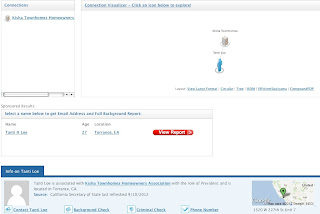
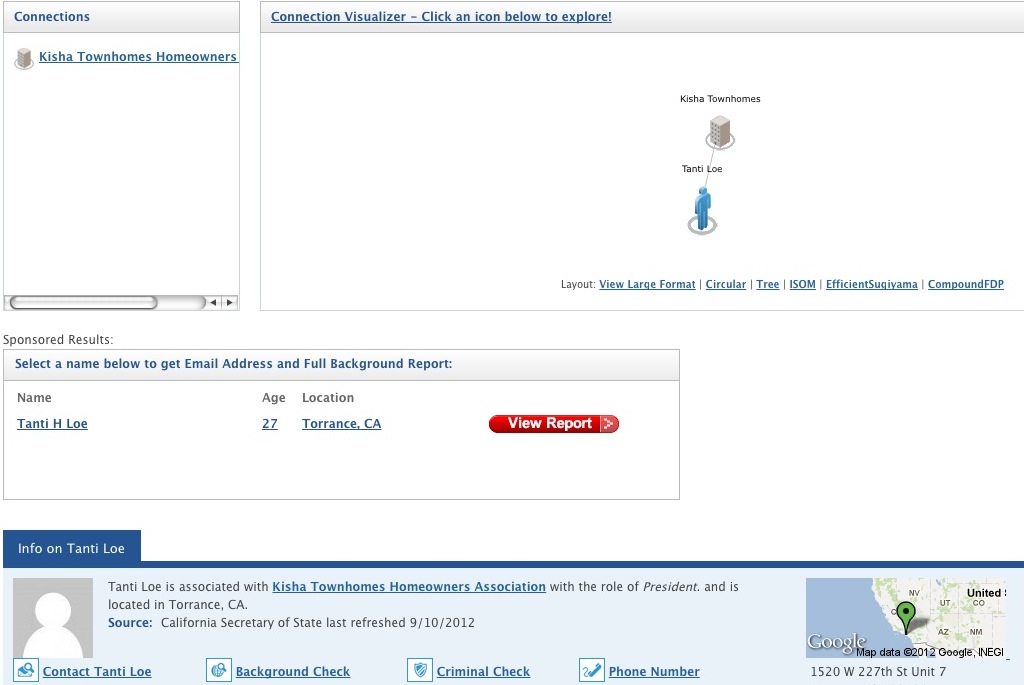
My husband served on the previous board. He was the treasurer. The president was Tanti Loe, the wife of Scott Allred. That board offered small wages for chores. In the newsletter, there was a call for volunteers. To set an example, my husband volunteered to take out the recyclable bin once a week. He was paid $5 a week. We both did this job which included cleaning around the bin area, taking recyclables out of the trash bin and taking non-recyclables out of the recycle bin. On Mondays, one of us wheeled the bin out to the street and then later brought it back. While it is true that a board director may not be paid for fulfilling his duties, s/he can be paid for work done outside of those duties. Janitorial duties are not usually a responsibility of the board directors. In our CC&R they were considered a separate issue from the responsibilities of a board director and from the office of the treasurer.
The previous board had made a unanimous decision to let the lawns die, due to the citywide restriction that only allowed for watering twice a week during the summer. A year later, the city would decide that three times a week worked better, but that would be too late for many lawns. At the time, the HOA also did not have a gardener and no one was taking care of two lawn areas in the back. At our own expense, my husband and I planted xeriscaping and tomatoes. The tomatoes were shared with other households. What's important here is:
- Both issues involved unanimous HOA board decisions.
- No member objected to the decision in writing to the board after being informed by newsletter.
- None of the other two former board directors, including the former president, Tanti Loe, were being charged for these decisions. Loe is the wife of Scott Allred.
- The decisions were made in good faith by board directors (5800).
There are certain elements required for a hearing according to state civil code (1363 (g)). The board failed to complete the required legal elements. The elements are:
- The board must notify the member in writing by personal delivery or first-class mail.
- The notification must be made at least 10-days before the meeting.
- The notice must contain the date, time and place of the meeting.
- The HOA must state the member has a right to attend.
- If the member requests it, the board must meet in executive session.
- The board must notify the member of the decision by personal delivery or first-class mail.
Because the board met outside where anyone could listen to the hearing, even from the public sidewalk, they could have been charged with defamation of character. The board also failed to produce documents (meeting minutes and newsletters) at our request that would have shown the two issues were board decisions and they refused to give us the evidence prior to the hearing.
Boards are required to produce records upon request (Corp. Code 8313 ); this was the basis of the October court case. For this reason, by November, the board was fully aware of their loss in court, they were aware of the civil code that required the production of documents and they were aware of the legal repercussions as a result of the October 2011 court case.
Usually, 30 days are allowed by law for the production of documents. Perhaps the best possible reaction of a HOA board in such circumstances would have been to provide the documents earlier or to postpone the hearing for at least 30 days. Neither of these two things happened. The board of Kisha Townhomes never produced the documents. Some of the documents (HOA newsletters) we found on our own.
For the HOA hearing, the board failed to fulfill the elements of due process because power must be exercised in a fair manner and the person accused has the right to know the identity of the accuser and must be given an opportunity to examine the evidence. We requested both and were denied both. If the accuser was either Allred or Loe, then Allred should have recused himself.
We had been advised by email about the hearing and we were advised by email about the hearing results. When we received the results, we were given the evidence. One piece of evidence was the request by the then-HOA president, Tanti Loe, to provide an estimate for the removal of trees. Three of the four trees were removed. Why is this important?
The cost estimate to repair the so-called damage to the lawns, includes the removal of a tree and other plants that had been planted by the developer. For this reason, the removal of the plants was not repairing "damage."
Our plan did not include lawn maintenance. It was for a vegetable community garden and had been approved by the board and gone unchallenged when announced to the membership via newsletter. We produced the newsletters in small claims court.
More importantly, the so-called cost was actually a bid by a licensed contractor. The work wasn't done by that contractor. The work was eventually done for a much lower cost by a non-licensed worker without a written contract (more on this below). The work included other things beyond the re-installment of the lawns such as the repair of driveways. By presenting evidence to the court that is false, the board was violating California state law in several ways. We believe this constituted both perjury and fraud. Another is the civil code 1366.1 now replaced by civil code 5600(b) which forbids the collection of excessive fees. This means a HOA can only impose a fine or assessment that equals the amount of the actual cost. Perhaps the Kisha Townhomes Board hoped to gain enough to offset the small claims court fine.
We were served in December 2011 by the board to go to small claims court in order to enforce the November 2011 hearing results. The court date was in February 2012. We filed a cross-complaint for the production of more documents. We used the failure of the board to fulfill the hearing requirements and due process as well as the board's attempt to profit from the hearing for our defense. By February 2012, the HOA board of directors knew the actual cost because the lawn had been installed. In court, the board was represented by Scott Allred. He presented the free bid estimate as the amount of damage because it was supposed to be the actual cost of the lawn installation. We showed the actual cost of the lawn installment and other added work by showing the bank statements the board was forced to give us as a result of the October 2011 small claims court case we had won.
Again, Kisha Townhomes paid the court costs having lost their case. Scott Allred was not recalled but re-elected and to date remains a director.
Get a reality check
We'd all like to think we're right, but if you need a reality check you can get some for free by talking with your friends about their experiences with HOA matters. That isn't enough. Do some research. I perused articles in the Los Angeles Times, the biggest area newspaper, and joined a forum such as HOA Talk. If things get really bad, call a lawyer for an initial consult.
We'd all like to think we're right, but if you need a reality check you can get some for free by talking with your friends about their experiences with HOA matters. That isn't enough. Do some research. I perused articles in the Los Angeles Times, the biggest area newspaper, and joined a forum such as HOA Talk. If things get really bad, call a lawyer for an initial consult.
 |
| Directors decorated the whole board so we couldn't post notes. |
In December 2011, when the board really outdid themselves in covert operations, we got a lawyer. That month the board hid the board meeting time in a decoration posted on the community board, then took that small handwritten announcement down when sent an email requesting the board meeting time, date and place. The treasurer, Allred, and the former president, Loe, were suspiciously seen going from door-to-door on that particular date and just before the appointed time. They then disappeared into one of the units belonging to a board member, Mel Campbell. Note there was no agenda posted other than playground which had been bought in November so nothing could be discussed according to California state legal codes. There were actually other matters discussed.
 |
| When we sent an email asking about a meeting, this meeting notice disappeared. |
One of the hidden issues we discovered by January 2012 was the annual election that we were not informed of, but everyone else was because we had been dropped from the newsletter email list after we filed our small claims court lawsuit. The newsletters had asked for nominations for board directors. This most likely is what was discussed at the December meeting.
Our lawyer was surprised at the actions of the board despite having years of experience as a real estate attorney and living in a condo community herself. In less than six months, the HOA board had stacked up a very thick list of civil and corporation code violations.
I also researched into animal hoarding. The board director who was the dominant force, Scott Allred, had a type of pet not allowed (rabbits) by the CC & R and over the number allowed for any kind of pet. He and his wife had six rabbits and two cats in their three-bedroom townhouse in January 2011. The cats were the most recent addition. The CC & R only allowed cats, dogs, fish and birds with a limit of two total of any kind of animal.
File for small claims court
Election irregularities and non-production of documents are two things that you can file for in small claims court. You file SC-100.
Election irregularities and non-production of documents are two things that you can file for in small claims court. You file SC-100.
The papers should usually be served to the person listed as the agent of service. You can find that on the Secretary of State's website by doing a business search. In the case that your HOA has not been good about filing the required documents (SI-100 and SI-CID), the person might not be listed or the information might be outdated. Although the management company had ended its contract with Kisha Townhomes, it took nearly two years (July 2013) for the HOA board of directors to change the agent of service of process to, you guessed it, Scott Allred. Due to budget cuts, the Secretary of State's office is behind on suspending HOAs that are late in filing these forms.

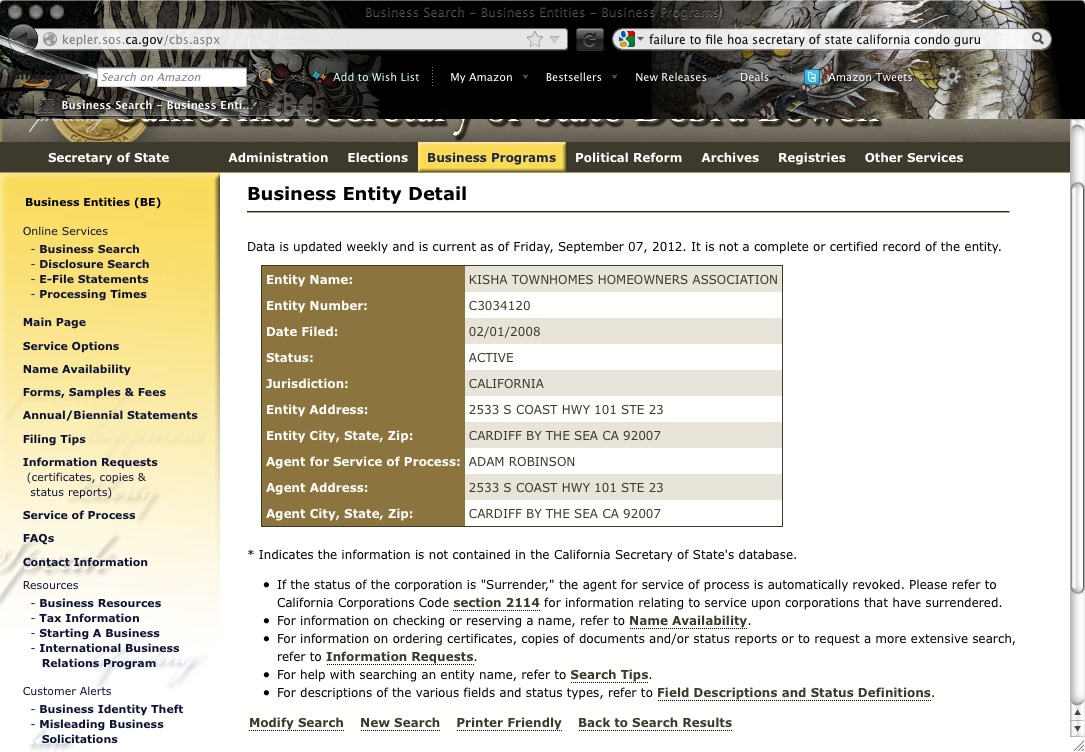
We had requested the board file the necessary documents and Allred wrote that he would file them in February 2012, but he did not. Ark Management wrote a letter disclaiming any responsibility as of May 2011 which we forwarded to the Secretary of State as well as a letter of our own as my husband was still listed as treasurer.
File a vacate order
In February 2012, the board lost their small claims court case to enforce their November 2011 hearing decision. That was a no-brainer. However, the judge also dismissed our countersuit which asked for a production of documents and to dismiss the election results.
In February 2012, the board lost their small claims court case to enforce their November 2011 hearing decision. That was a no-brainer. However, the judge also dismissed our countersuit which asked for a production of documents and to dismiss the election results.
The elections results were one thorny issue because who would rise to fill the three seats and since the current elected board was the former board, nothing would be gained by giving the positions back to the previous board. However, the non-production of documents was pretty clear cut. All members have a right to see the documents. We were being denied a right and being treated as separate and unequal. The judge was clearly wrong.
To challenge a judgment you have 30 days and need to file either SC-108 or SC-108A. This is true in any small claims court case and I've done it twice--once without success although the defendants had clearly perjured themselves--and once successfully. Perjury, particularly in a small claims court case, is rarely prosecuted. People who've been hauled into court more than once soon enough learn this, so you have to be ready to respond to all possible sorts of false statements.
To challenge a judgment you have 30 days and need to file either SC-108 or SC-108A. This is true in any small claims court case and I've done it twice--once without success although the defendants had clearly perjured themselves--and once successfully. Perjury, particularly in a small claims court case, is rarely prosecuted. People who've been hauled into court more than once soon enough learn this, so you have to be ready to respond to all possible sorts of false statements.
When filing the form consider your rights that are guaranteed by the CC & R and state civil code as well as federal guarantees. Consider the effect the decision has on the community at large. Be firm but don't be disrespectful to the judge. When we again went to court, the judge then ruled in our favor and required the board to produce the documents requested, however, the judge failed to actually list the documents requested. Not all judges are diligent in their duties. Typing out one sentence should not be too much to ask from a public servant.
File for contempt of court
You hear about contempt of court all the time on TV, but small claims court doesn't make it easy to file a motion that doesn't require collection of money. For collection of monetary judgment you can file formSC-220, but for non-monetary judgments that go unfulfilled, you need to file SC-105 (Request for Court Order and Answer). You ask for the court to compel and sanction.
You hear about contempt of court all the time on TV, but small claims court doesn't make it easy to file a motion that doesn't require collection of money. For collection of monetary judgment you can file formSC-220, but for non-monetary judgments that go unfulfilled, you need to file SC-105 (Request for Court Order and Answer). You ask for the court to compel and sanction.
Depending upon your court, this might take even more time. In our second case in February 2012, our judge failed to write anything. When challenged in March 2012, she again failed to specify what documents the HOA board was required to produce. That led to more legal problems with production of documents.
When to call the police
When the board director, Scott Allred, was caught on camera stealing our property from our balcony after previously denying it (orally and in writing), that was the time to call the police. Allred had to climb up a ladder to steal things from our balcony. Allred was found to be in possession of signs belonging to our real estate agent and ourselves (Incident no. 3736) by two police officers (Medina #39292 and Makari #39560). The police make good witnesses.
When the board director, Scott Allred, was caught on camera stealing our property from our balcony after previously denying it (orally and in writing), that was the time to call the police. Allred had to climb up a ladder to steal things from our balcony. Allred was found to be in possession of signs belonging to our real estate agent and ourselves (Incident no. 3736) by two police officers (Medina #39292 and Makari #39560). The police make good witnesses.
There are things that cannot wait for a board meeting and there are things that the board is not responsible for. Theft is something that the board has no jurisdiction over. Vandalism is another. Some people choose to fight when things get really bad such as the condo lawsuit in Hawaii.
When to cut and run
Do you really want to live in a place where your director uses a ladder to climb up to your balcony and steal your stuff? Would you feel safe where petty theft and invasion of privacy are acceptable behavior on the part of a director? Do you want to belong to a HOA where no one would recall a director who has been proven both a thief and a liar, particularly a director serving as treasurer? Do you want to wait for the retaliation? Do you want to live next door to a couple that, in my opinion, were early stage animal hoarders? Can you afford to take on the legal liability of a rogue board? If not, then it's time to sell.
We decided that because we knew this board was making arbitrary and even vindictive and retaliatory actions against us that moving was the best option and renting was not an option.
One important issue that prevented us from renting was legal liability that the board directors ignored. The board of directors bought a playground set from Toys R Us without a member discussion or any legal or budgetary research. We gave the board information about legal requirements. The playground was not installed while we lived there, but we worried that no assessment of legal requirements or future costs had been made in the meeting minutes where the playground was noted. Other members dismissed our concerns when the playground was discussed at the general meeting in January 2012. This was before we had the opportunity to be proven innocent of the hearing charges in small claims court.
California state has adopted the Consumer Product Safety Commission guidelines as standard for all public playgrounds. California Health and Safety Code mandates statewide regulations for playground safety since 1992. There are state regulations for the design, installation and maintenance of public playgrounds. Although those state regulations address public playgrounds, the Assembly Bill 1144 (2006) put that Health & Safety Code (115725) into effect for common interest developments with playgrounds accessible to the public and according to the Davis-Stirling.com website, section 1.3 seems to include all HOAs.
There are a variety of playground surfaces listed in Public Playground Safety Handbook and recommended by the U.S. Consumer Product Safety Commission:
- Wood mulch
- Double shredded bark mulch
- Uniform wood chips
- Shredded rubber loose fill
- Fine sand
- Course sand
- Fine gravel
- Medium gravel
Notice that grass isn't one of those surfaces. Why would anyone put a new lawn in and then install a playground? This was one of our questions, but the board refused to address it. In the meeting minutes, we read no talk about fall zones or regular mandatory inspections or estimating the costs or legal liability. If a child or anyone was injured on the playground and it was found that it didn't conform to mandatory state standards and was not given an initial inspection or regular inspections, then the HOA would be found at fault and because most insurance policies have a stipulation that the coverage doesn't extend to the insured if they are breaking city, state or federal code, the members might be in for the full amount. Head injuries are common and swings are responsible for 67 percent of the injuries .
Our board was heading for an easy to discover violation. We seemed to be the only ones interested in fulfilling legal requirements.
We considered renting, but this seemed like a risky venture for the following reasons:
- We worried about the legal liability if a playground was installed that didn't meet state standards.
- The board used non-licensed workers even when the state and the CC&R required licensed contractors and this had us worried about big bills in the future. We asked for contracts in court; the board said there were none. We checked and found the contractor wasn't licensed and any problems would not be covered by insurance as a result.
- We had asked for termite inspections, but were denied. The board refused to meet and consider tenting even when termites were found, a year after the initial request. Where I had lived previously we had annual inspections. At that time of my request to the HOA, no termite inspections had been done for 2-3 years.
- We were tired of asking the board to consider the legal requirements while the other members seemed to feel that legal liability wasn't an important issue. It was for us.
We sold at a loss. If your condo is your vacation dream home, then you might want to stick it out and fight, but that can be expensive as well as risky. The Molokai case included death threats and vandalism and took a couple of years to settle.
We sold for $335,000 in 2012. Zestimate says the condo is now worth $441,881, but that doesn't include the predictable legal problems. What's interesting is that Unit #8 attempted to sell for $390,000 in 2012 and lowered the price to $344,000 in January until finally removing the listing (January 25, 2013). Unit #6 attempted to sell for $379,000 in June of this year and had to lower the price to $374,900. Unit #2 just listed in July for $399,000. When four out of ten units wants out, that's not a good sign, particularly if we were portrayed as the problem neighbors and have been out for almost a year. Is there a problem or are these members selling at the same time only a matter of coincidence?
Protect yourself
We understood that there was a full disclosure law in real estate sales. We protected ourselves during mediation. Scott Allred and the other two board directors (Jaubin and Mel Campbell) signed a document in which they swore they would follow the state civil code for agendas and meeting notification. Allred also confirmed that he and his wife no longer had any rabbits on the property. If any of the directors were dishonest, then that might be grounds for a charge of willful misconduct, making the individual director responsible for any financial loss instead of the HOA or us as the seller of the property.
We understood that there was a full disclosure law in real estate sales. We protected ourselves during mediation. Scott Allred and the other two board directors (Jaubin and Mel Campbell) signed a document in which they swore they would follow the state civil code for agendas and meeting notification. Allred also confirmed that he and his wife no longer had any rabbits on the property. If any of the directors were dishonest, then that might be grounds for a charge of willful misconduct, making the individual director responsible for any financial loss instead of the HOA or us as the seller of the property.
We did everything we could to protect the new owner of our former unit and that person also had access to the court cases which were a matter of public record.
How to vent
If you are going to vent online be sure that you are not crossing the line into slander or libel. Libel or slander must be untrue. Further, if your online rants target a director you do have more leeway because they are quasi-public officials and can be considered limited purpose public figures. The names of the board of directors is or should be public information. If the board of directors is part of a lawsuit, they are often named and their names are in documents submitted to the court.
Stick to the facts, particularly ones that are a matter of public record and/or can be proven in writing. State your opinion as such. The small claims court cases are a matter of public record. Who attended the small claims court case is a matter of record because both the claimants and defendants are required to sign a document before the case is heard. The case often lists the names of the people involved. The names of the officers of a common interest development are a matter of public record and HOAs are required by state law to file SI-100 and SI-CID with that information. Police actions are recorded by incident numbers and reports are filed. We have third-party proof that Allred and his wife Tanti Loe were in possession of rabbits at a number exceeding two.


The U.S. Bill of Rights protects opinion as long as it is not defamatory, slander or libel.You have a right to your opinion, but in a HOA (also known as a common interest development) in order to protect your rights you must be aware of them guaranteed by your CC & R and your state civil codes. You must keep informed about your board's actions and be willing to stand up and say something about violations. I wrote this article mainly because it was difficult to find how to challenge a judge's decision and I wasn't sure what to do for a motion that didn't involve a monetary judgment.
While some people feel that suing your HOA is suing yourself, the same argument could have been made about other civil rights such as voting for minorities and women. When citizens sue the federal, state or municipal governments to protect their civil rights it is a similar issue. If bringing court action is the only way to protect your civil rights, then you need to stand up for yourself and other people. My only issue leaving this experience is that it shouldn't cost so much to protect civil rights in a HOA. States should work to change that problem because in the worst case scenario, people are being threatened and it can take years and a huge financial commitment to fight a HOA. To date, no state representative has responded to my letters, even after the publication of my opinion piece.
Fighting for your rights is what this country was founded on. A good HOA is not a dictatorship and should allow for differences of opinions and active listening by directors who are there to really serve the community and not their own interests.