Amazon

Showing posts with label Movies and Movie Stars. Show all posts

Friday, July 5, 2013

Johnny Depp, Tonto and Native American culture: Who decides the real and the fake?

If Johnny Depp believes he's Native American, then is that more important than if he actually is or not? And does the exact percentage make him more or less Native American? How much does that matter for the movie "The Lone Ranger"?
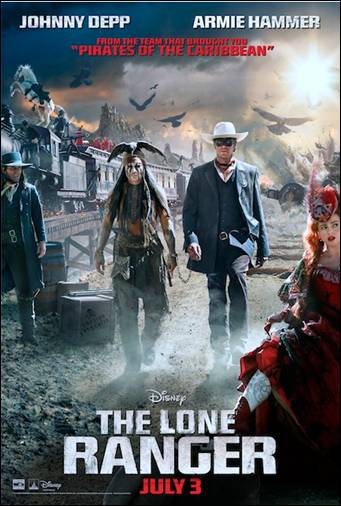


image004
I ask this as someone who has been challenged as being East Asian American enough by other East Asian Americans, specifically Japanese Americans because I didn't measure up to their prejudices of how a Japanese American should act. Oddly enough, I was only faced with these accusations when I left my native San Diego and moved to Los Angeles and Orange County. 

I am 100 percent Japanese ethnicity, but for some, including my ex-husband and former in-laws, that wasn't enough. There are other East Asian Americans who had earlier attempted to delineate what was true and false (e.g. Frank Chin and the editors behind "Aiieeee! An Anthology of Asian-American Writers").

Depp's assertion that he was part Native American comes long before he was cast on Tonto. According to Ethnicelebs.com, Depp made this claim first in 2002. That was the same year that shooting for the first "Pirates of the Caribbean" movie began.

It should be noted that Depp probably has little way of proving that he is Native American. Not all Native Americans have been tested and testing that may prove membership will not necessarily distinguish specific tribe membership.

According to a 2006 Slate Magazine article about genealogical testing:
Admixture testing works best in groups like African-Americans, whose ancestors in Africa and Europe lived far from each other. Most of the ancestry of today's African-Americans can be traced to West or Central Africa, with a minority from other parts of the continent. (Gates' family is a bit exceptional in terms of origin.)
But for other groups things can get a lot more complicated. Many amateur genealogists are interested in whether they might have a Cherokee ancestor, for example. And for some people, admixture tests can give a relatively accurate answer about Native-American ancestry. But other people, including Greeks and Ashkenazi Jews, may have "Native American affinity," according to the tests, even if they and their ancestors have never been to America. As far as anthropologists know, there were no lost tribes connecting Greeks, Jews, and ancient Americans. So, maybe this "Native American affinity" reflects the scattering of alleles by prehistoric Asian nomads to the ancestors of Greeks and Jews as well as to American Indians. Maybe the SNPs that they share gave these groups a leg up in fighting diseases.

There another point that the Ethnicelebs brings up. Depp seems to have African ethnicity in his background. I had heard that during less enlightened times during American history, people hid their African heritage by claiming American Indian heritage instead. In any case, according to Ethnicelebs, Depp has both African American (3/2048) and Native American ancestry (1/2048 Powhatan Native American descent).

If Depp's claims of ancestry are true, it wouldn't be enough for him to be considered Native American, but that 3/2048 would have, in a different era, been enough to have him considered black. Yet there is another problem within the Native American population. Native American populations mixed with white and African immigrants. White and Native American intermarriages have occurred since the 1700s. Yet to be an official member, an individual must have 1/4 or more ancestry within a federally recognized tribe. Yet who is recognized and who is not?

In researching this article, I was surprised to discover that Rosa Parks was also part Native American. The Wikipedia article on Black Native Americans notes that " African Americans are using DNA testing to find out more about all their ancestry. Native American identity has historically been based on culture, not just biology." Further, Native American groups have excluded Freedmen from membership based on the early 20th-century Dawes Rolls (Cherokee freedmen controversy).

As I mentioned above, I am 100 percent Japanese by ethnicity, but most people will not guess that I am Japanese American. The natural state of my hair (wavy) doesn't help. This and other factors has led other Japanese people in Japan to consider my second and third cousins in Japan as not Japanese.  Traditionally, wavy hair was stigmatized in Japan. So I might not be able to pass as Japanese and if I were an actor, I might not be cast as Japanese. I might be cast as Chinese or Filipina. 

I'm also not Buddhist, Taoist or a follower of Shinto which might also make me seem less "real" Japanese. Still in Japan, my relatives embraced me and pointed out characteristics that made me part of the family. This was particularly true for my father's side of the family. I remember this when someone tries to tell me otherwise and pejoratively label me a banana. What gives that person the right to tell me s/he knows how a true East Asian ethnic or Japanese ethnic should act?

My friend once told me that he believed he was full Chinese from Vietnam, but was traumatized to learn that he was part Vietnamese, particularly since his father looked down on the Vietnamese. So just who are we: What we are or what we believe we are? And just how much is enough?
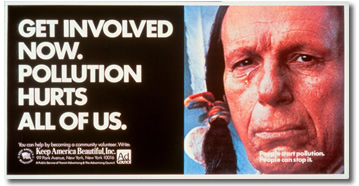
iron-eyes-cody
If Depp isn't Native American enough either culturally or by blood is one issue, then the other issue should be can he pass? What about Iron Eyes Cody who passed despite being of Italian (Sicily) ancestry? Cody lived his life as a Native American and married a Native American woman. He was also honored by the Native American community in 1995 despite his lack of ancestral ties to the Native American community.
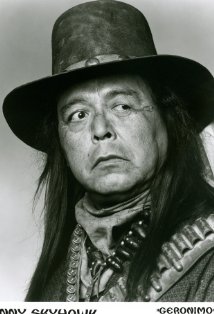
MV5BMTgxODA5MDM4MF5BMl5BanBnXkFtZTcwNzMzNzQ2NA@@._V1._SX214_CR0,0,214,314_
The Irish, Comanche and Cherokee Micki Free, a Native American musician.
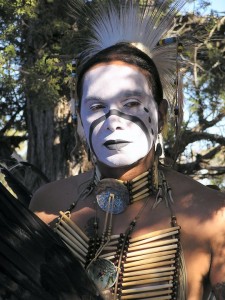
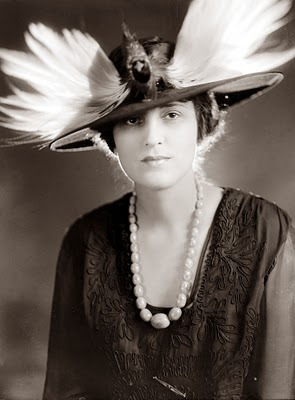
So much has been made of the bird in Tonto's hat. The painting that inspired the make-up has a crow, but not in the Native American's hat because he isn't wearing one. Fashionista know that bird in hat are old hat--something that Marie Antoinette popularized. According to the blog by jmongeon, women in the 1900s adopted this fashion long after Marie Antoinette had lost her head in 1793.
bird-hatbird-hat1tumblr_lrmpwljVGT1qlv0aho1_500
So much has been made of the bird in Tonto's hat. The painting that inspired the make-up has a crow, but not in the Native American's hat because he isn't wearing one. Fashionista know that bird in hat are old hat--
Actually, I've also seen a few Hollywood hats off to Tippi Hedren and Alfred Hitchcock's "The Birds" in West Hollywood during the 1990s. Bjork may have had a swan dress in 2001, but other women in the 2000s have re-visited the bird or bird nest hat. What could be more steampunkish than re-adopting the stuffed animal hat of yester-year for a bit of high fashion today? That model with the bird nest and wings was from a 2006 fashion show.

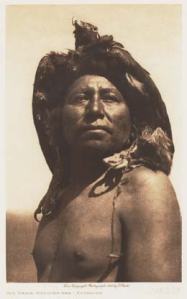
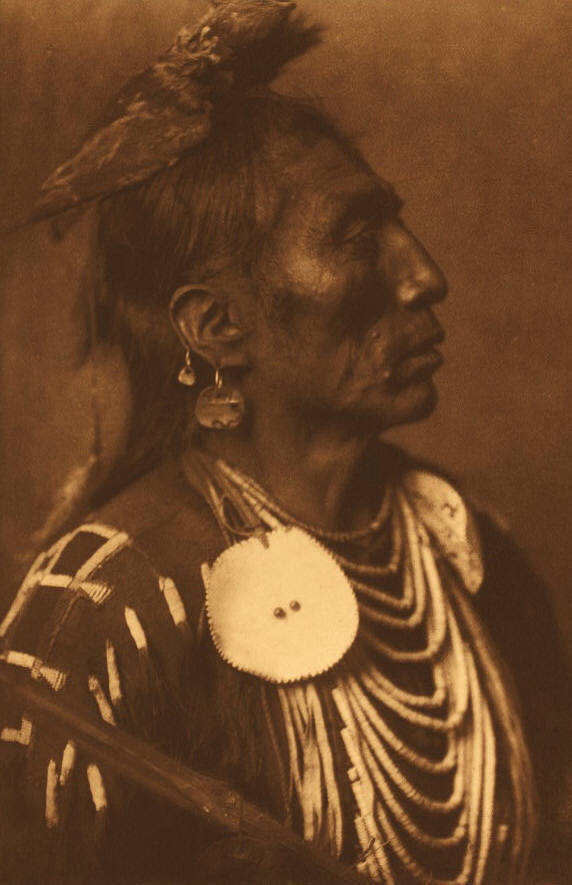
Now, I'm not saying that the Native Americans copied the fashion of White American women. Yet we need to ask: Did Native Americans wear bird in their hair? Apparently some did as seen in these photos of Crow (Apsaroke) Native Americans from the past.
feb11See these old photographs of Crow (Apsaroke) Native Americans.
Edward_S_Curtis_Medicine_Crow_Apsaroke_Portfolio_4_Plate_117_204_1175
Curtis-Two-Whistles-Apsaroke


One of the commentators, Sonny Skyhawk, has passed for Native Hawaiian and Mexican so that was reasonable enough for him. He was, by his own logic, taking away a job from a Native Hawaiian. Those Mexican roles are easy to rationalize because many Mexicans are mestizo or part Native American, even if the mixing was a long time ago, just as seems to have been the case with Johnny Depp ancestry. In a different era, Mexican actor Ricardo Montalban played Native American roles as well as East Asian (a real stretch). 
The movie "The Lone Ranger" had a supervisor and Depp was adopted into an Comanche family. At least from the perspective of one recognized Native American (William "Two-Raven" Voelker) and then one person who perceives himself as Native American (Depp), the movie portrayed Native Americans in an acceptable fashion. But like everything else, that's just an opinion of two different people.

Thursday, May 23, 2013

Reclaiming and disclaiming Khan

Khan is a title for a ruler in Turkic and Mongolian languages. It was also used by Persians and Afghans for their chiefs and noblemen.  Khan is also a surname found in Central and Western Asia. That all makes sense.

In history, the most famous Khan was Genghis Khan (1162-1227), the ruler of the Mongol Empire. His grandson was also famous enough, Kublai Khan. Genghis conquered most of Eurasia--the largest contiguous empire in history. Not just the history of Asia. In history. He united nomadic tribes brought the overland Silk Road under a stable socio-political environment. In Turkey and Mongolia, he's a hero.
In China, he gets mixed reviews. In Iran, Egypt and Europe, he was one of those threatening hordes.

In "Star Trek" TOS, he was the savage in "The Savage Curtain." That's the episode that pitted good (Abraham Lincoln, Captain Kirk, Spock and Vulcan hero Surak) against evil (Genghis Khan, Klingon empire founder Kahless, genocidal human Colonel Green, and having a bad-hair century Zora of Tiburon).

Khan was played by an East Asian American (Nathan Jung). And according to Memory Alpha, the Star Trek Wiki, the Klingons were originally made to look like "futuristic Genghis Khan."

Of course, in Star Trek, there's that other Khan. I'm not talking about the 23rd Century USS Genghis Khan, but the infamous Khan Noonien Singh. He makes his first appearance in TOS episode "Space Seed," portrayed by Ricardo Montalbán. Montalbán reprised the character in "Star Trek II: The Wrath of Khan."

Khan was supposed to be a genetically engineered superhuman Sikh from Asia. He took control over a quarter of Earth during a Eugenics Wars in the 1990s. When found by Kirk and Enterprise, he's been in suspended animation. Now in Star Date 2267, he attempts to take control of the Enterprise. Kirk defeats him, but puts him on a planet Ceti Alpha V. Fifteen years later, he escapes and attempts to get revenge upon Kirk.

The casting of Montalbán as a Sikh can be explained away as the convention of those times. Then for the movie, there was a matter of continuity. SPOILER ALERT. Yet for the current reboot of Star Trek, there is almost no credible explanation. Marissa Sammy called it "Star Trek: Into Whiteness."

In 2004, there was an estimated 27 million Sikhs. Most of them are in India. There are quite a few in the U.K. and the United States as well as Canada if accent was a problem for J.J. Abrams.  I've not seen the movie yet and am unlikely to do so. I'm not pleased with Abrams casting choices for Kirk, Sulu or Spock and Uhura. I was a theater critic and the captains I admired all had stage presence and theater backgrounds. Like Christian Blauvelt, I appreciated what he calls the "exploratory spirit" of Gene Roddenberry's series. I liked the humor of TOS and also admired Janeway in the Voyager.

I'm not interested in an action movie that keeps our attention instead of attempting character development and writing in emotional or intellectual content. There are still many ethical and social questions that can still be explored in this century that could be transferred to the time of a young Captain Kirk, but not with J.J. Abrams.
And I particularly am not a fan of whitewashing history. Both Blauvelt and Marissa Sammy of Racebending.com noted this whitewashing as well. I enjoy Cumberbatch as an actor. I enjoyed the encore screening of his "Frankenstein" with Jonny Lee Miller. But he doesn't make me think Asian or Sikh and he won't replace the impression that Ricardo Montalbán made as Khan in my mind, even, I'm pretty sure, if I went to see the movie.

Aren't there enough Asians and Asian Americans in Los Angeles for J.J. Abrams and Hollywood to understand this?  There's been a lot of whitewashing in movies--think of "21." And then there's yellowface.

Another point would be in this reboot, with an international market that TOS didn't expect to have, why don't the producers even acknowledge and give respect to Asia and ethnic Asians who make up over 60 percent of the world population. I'm not saying that the new Khan has to be Sikh. He should be able to pass as Sikh or Asian Indian. He should not be the same actor who has taken to playing some very distinctly English characters as in Sherlock Holmes (a modern version) or a British officer in "War Horse."

The Star Trek reboot had the opportunity to overcome the ethnocentric evaluation of Genghis Khan which I feel relates to why this villain is given the name of Khan Noonien Singh. We're in a different century, five decades after TOS.  While "Iron Man" skillfully handled the issue of bringing The Mandarin forward into this century, "Star Trek into Darkness" went backward.

If the English considered the Asian Indians, including the Sikhs, as black like "Little Black Sambo" then why does our Sikh of the future Khan Noonien Singh appear to be so white? Is this like "Cloud Atlas" where the whole population of the Big Island of Hawaii becomes white as Tom Hanks? These two cases of whitewashing remind me of the 1944 "Dragon Seed" where white people can play any race and Asians and ethnic Asians can be background actors in the movies and life.

I don't know that 60 percent of Earth's population wants to remain background players in movies or in the world. When will the whitewashing end? Some day I hope that a Star Trek movie will reclaim Khan as Asian and that other Khans like Genghis will be re-evaluated as if the Federation actually has become a less Eurocentric organization. That would be a step into a future that Asian and Asian Americans can share and I would endorse. What J.J. Abrams proposes is a future that has gone backwards and his movie should come with a disclaimer: This is Khan and the Federation with an attitude from the 1940s but the CGI and technology of the 2010s.


*Help sponsor me at USC.


The problem of Israel versus the Arabs

Three recent movies show a growing change in the public sentiment toward Israel: "Valentino's Ghost," "5 Broken Cameras," and "The Law in These Parts."  You might ask why this would concern an LA Asian?

First we have to locate Israel. It is in the Middle East, but that term covers once country in Northern Africa (Egypt) and several countries in Western Asia, including Israel. According to Wikipedia, the term was coined by the British India Office in the 1850s.

Oh, beware the British. They conquered Palestine in 1917. And from the British comes much of what we, or Hollywood knows about the Arabs according to the recent documentary, "Valentino's Ghost." The Valentino the documentary has in mind is Rudolph Valentino who died still young and much adored at the age of 31 in 1926. He had starred in the silent movie "The Sheik" and later "The Son of the Sheik." His father was Italian; his mother was French.

In the movie "The Sheik," he played the titular character, but the twist at the end, prevented this fantasy of love in Arabia from crossing the color line and threatening the tenants of Social Darwinism. Raised by Arabs, the character was half-British and half-Spanish. He was European, even if some Brits might look down on the Spanish for color or Catholicism. He was not Arab and rose above his surroundings as a superior man.

"Valentino's Ghost" looks at how we've portrayed Arabs and Persians in the media. We've gone from them as what Rudyard Kipling called, "The White Man's Burden," to the bestial hoards of fanatical terrorists. When European powers invade their lands, the Arabs are certainly not defending their land and rights to self-determination. The Arabs and later Persians are savages and rebels. That does make the question of Israel very tricky indeed.


Arabs, Persians and many Muslims are Asian and it's still PC to stereotype them. History is written by the victors, but that's only half the story. In America, we're mostly taking the story from a Eurocentric viewpoint.

Yet even Europe and America have to look at what's happening in Israel and wonder. "Valentino's Ghost" is narrated by bleeding heart liberal Mike Farrell of the TV series, "M*A*S*H" fame. I admire him for doing it.

The documentary "Valentino's Ghost" shows how movies and media have whitewashed history and supported the image of the Arab or Muslim rebel which has transformed into terrorist.

"The Law in These Parts" looks at Israel's viewpoint, but I didn't come away with much sympathy for Israel. Using archival footage as well as contemporary interviews, the documentary shows the men who shaped the Israeli policy toward the Palestinians. We're talking lawlessness within law enforcement. The documentary won the Grand Jury Prize at Sundance.
On a more personal level, "5 Broken Cameras" has a father using cameras as a means of non-violent protest.


"5 Broken Cameras" was nominated for an Oscar for Best Documentary in 2013. It won Best Documentary at the Jerusalem Film Festival in 2012, the Busan Cinephile Award at the 2012 Pusan International Film Festival and a directing award at the 2012 Sundance Film Festival.

My point is by buying into the Muslim, Persian or Arab terrorist stereotype Asians and Asian Americans are ignoring the concerns of other Asians and Asian Americans and participating in the whitewashing of history.

*Help sponsor me at USC. 

Thursday, May 16, 2013

My breasts and I salute Angelina Jolie


As a child, I remember looking at my Barbie and wondering when I, too, would look like that. I would suck in my waist and try to expand my childish breasts. Of course, as an adult I realized that normal female human beings do not look like Barbie.

Besides, being ethnically Asian and not part of the Beverly Hills Sweet Sixteen I need a plastic surgery party kind of social class, it was not meant to be. I was never going to have a chest that might inspire comparisons with missile heads or melons. Men and women let me know about my deficiency in this respect.

Yet I've been on both sides of just enough and not enough. As a mediocre gymnast in high school, my meager cleavage was a blessing.  I have a good physique for a female gymnast. Gymnasts move on after they hit their twenties and develop womanly figures, and some even develop some real cleavage. When I was still pursuing gymnastics, I got on a scale every day. As one male gymnast pointed out, if you don't have much cleavage you can't afford to get a gut.

Now, I'm much too old for gymnastics, but in my current hobby of belly dancing, there's not enough jiggle on top to make any sort of shoulder shimmy worth watching. While belly dancing originated in North Africa and West Asia where women dress conservatively, in Europe and America, belly dancing is performed in what is little more than a fancy bra and a skirt. Cleavage matters. I have no jelly bowls to jiggle. 

As a young adult, I've suffered through bad bras, and as a post-college woman, I've been offended by online crassness when I was still dating. A guy wants to see a  full-length photo and even then, more than a few will ask you what your cup size is. They expect at least a B and hope for a C if you're Asian.

As being ethnically Asian defines me, having breasts that require a bra defines me. I am to some men, my bra size.
Even so, I can't imagine the kind of pain and self-image reassessment that Angelina Jolie went through before she arrived at her decision. She is an attractive woman and she must know that some of that attraction has to do with her breasts. When the story broke about Jolie's NYTimes opinion piece, I remember thinking about what some waggish film commentator wrote about her as Lara Croft, something about her running in a T-shirt. For some men, all women are just their breasts. I once watched the Oscars with a mixed crowd and a pre-med student kept commenting on all the women--whether they were or were not wearing a bra. Maybe some men filter those thoughts before letting the words leave their mouths. I hope not.

As one of my colleagues noted, there was some lamenting online about the loss of Jolie's breasts. I am sure that she must have known this would happen. She has chosen to have reconstructive surgery. Will people now cattishly compare the now and after?

The kind of mindset that equates women with their breasts almost justifies the kind of modesty you find in North Africa and West Asian countries. Consider that female breasts are not the historically the sexual obsession of all cultures. There used to be a joke about the difference between Chinese and Japanese women showing their physical assets. Chinese women showed a little leg. Japanese women showed the back of their neck or a white foot and ankle. Cheongsams and kimonos aren't made to show cleavage.

In Japan, the concept of female sexuality is more mutable. The first novel in world history, Genji Monogatari, was written by a woman. At one point, the protagonist's good friend opines that it is a shame that Genji wasn't born a woman. That's not an admission of homosexuality, but how in the Japanese culture things aren't always what they seem. A beautiful face is a beautiful face but could easily belong to a man or a woman.

In Japanese traditional theater, all the actors are men. That wasn't originally so. Kabuki started out with female actors, some of whom might have also been soliciting. Eventually, the women were replaced by boys and when male patrons were still brawling over the boys as women, the boys were replaced by men and the onnagata tradition began.

One of the most popular and celebrated onnagata is Bando Tamasaburo V. Watching him on TV and on stage, you can learn how to be womanly in a traditional Japanese sense. You don't need cleavage to be feminine. I've met heterosexual men who were lovestruck by Tamasaburo in his younger years.

Even the samurai tradition, if Western aficionados would admit it, has an element of homosexuality that can fall into a gray area as illustrated in the 1999 Japanese movie "Gohatto" (御法度), or "Taboo."The Nagisa Oshima film isn't so much about homosexuality but the desire for a beautiful face that could be a woman's. You have to wonder why Kanō Sōzaburō (Ryuhei Matsuda) refuses to cut his bangs. Would that make him more masculine and in this all-male group, less powerful? Yet for this essay, what's important is that he inspired lust not because he looks like another man, but because he could pass as a woman.

How hard is it for a woman to realize that she'll never be as beautiful as a man dressed as a woman? That topic was touched upon in the 2003 Takeshi Kitano "Zatoichi." I knew that feeling when I saw Tamasaburo as a woman and again when I was in Hollywood one day. I was rushing in between work and classes. I had not brushed my hair or had time to put on lipstick. Yet the most beautiful woman in the room was a man. He obviously had to try hard and I wasn't even trying. That either makes you give up and gives you time to consider what makes a woman?

In Western cinema, women like Audrey Hepburn and Elizabeth Ashley have been able to make it without a bountiful cleavage and been considered beautiful. Yet in more recent years it seems as if pornography has crossed over to become part of pop culture with Madonna posing for a special limited edition pornographic book. Breast augmentation surgery has become more common place. Now small breasts can be considered a physical defect.

In another real streets of Hollywood experience, I remember taking a woman to a one-woman stage show about breast cancer in Hollywood. She said, "Why would anyone want to talk about that?" What she said was true. Even at a time when it was finally PC to talk about AIDS and HIV, past the Larry Kramer and ACT-UP generation, people didn't want to talk about breast cancer. But we do need to talk about breast cancer, and women shouldn't feel that their identity as women depends upon their two breasts.

Instead of talking about Angelina Jolie's breasts, we should be talking about how expensive it is for the average American woman to get the genetic test for BRCA1 and BRCA2. We should talk about how some 458,000 women each year die from breast cancer and how few women can afford the choice of reconstructive surgery. We should talk about breast cancer or how to talk about breasts without falling into a snickering boy peeping Tom mentality. 
In America, we have the technology, but we don't have affordable healthcare, something that is available in other countries such as Japan and Canada.

We need to rethink our values. Angelina Jolie gave us something to talk about and it was undoubtedly a courageous thing to do. Let's talk about things that matter to hundreds of thousands of women all over the world. I no longer want to be Barbie, but I also don't want to be defined by my cup size. Angelina Jolie noted she had options, but those medical options aren't available to too many women in America and around the world.